
Voices of Freedom Volume 1 PDF Free: Article Plan
Voices of Freedom, a crucial historical resource, presents primary sources alongside Eric Foner’s narrative, fostering critical thinking and deeper understanding of American history.
This documentary history, available in Volume 1 and beyond, complements the textbook “Give Me Liberty!” offering extensive excerpts for scholarly exploration.
Instant PDF downloads of the sixth edition (ISBN-13: 978-0393696912) provide convenient access to these invaluable historical documents for students and researchers.
Voices of Freedom uniquely blends historical narrative with impactful primary sources, offering diverse perspectives on American experiences, readily available as a convenient PDF resource.
This documentary history, designed as a companion to “Give Me Liberty!”, encourages students to critically analyze historical events through firsthand accounts and original documentation.
Exploring Volume 1 provides a comprehensive journey through Reconstruction to the Cold War, fostering a nuanced understanding of America’s evolving freedoms and challenges.
What is Voices of Freedom?
Voices of Freedom is a meticulously curated collection of primary source documents, designed to accompany and enrich the study of American history, particularly when used alongside Eric Foner’s acclaimed textbook, “Give Me Liberty!”. It’s more than just a compilation; it’s a deliberate effort to present a multifaceted view of the past, moving beyond traditional narratives to include the perspectives of often-marginalized groups.
Volume 1 specifically focuses on the period spanning from Reconstruction (1865-1877) through the early Cold War era (1945-1953), offering a deep dive into pivotal moments and movements. These aren’t simply excerpts about history, but the actual words – letters, speeches, legal documents, and personal accounts – from the people who lived it.
The availability of a PDF version enhances accessibility, allowing students and researchers to engage with these vital sources conveniently. It’s a tool for fostering critical thinking, encouraging readers to analyze, interpret, and draw their own conclusions about the complexities of the American experience.

Significance of Primary Sources in Historical Understanding
Utilizing primary sources, as prominently featured in Voices of Freedom Volume 1, is paramount to genuine historical understanding. Unlike secondary accounts which offer interpretation, primary sources – letters, diaries, speeches, official documents – provide direct, unmediated access to the past.
This direct engagement allows students to move beyond simply memorizing facts and instead develop critical thinking skills. Analyzing these sources encourages questioning, contextualization, and a nuanced appreciation for the complexities of historical events.
The PDF format of Voices of Freedom facilitates this process, making these invaluable documents readily available for close examination. By encountering the voices of those who shaped history firsthand, learners gain a deeper, more empathetic, and ultimately more accurate understanding of the American narrative, fostering a richer intellectual experience.
Target Audience and Academic Use
Voices of Freedom Volume 1, readily accessible as a PDF, primarily targets undergraduate students enrolled in American History courses, particularly those utilizing Eric Foner’s “Give Me Liberty!” textbook. It serves as a crucial companion, expanding upon the brief primary source excerpts included within the main text.
However, its value extends beyond the classroom. Researchers, educators, and anyone with a keen interest in American history will find this collection invaluable. The comprehensive selection of documents fosters independent study and in-depth analysis.
Academically, the text encourages critical source evaluation, historical debate, and the development of well-supported arguments. The PDF format allows for easy annotation, highlighting, and integration into research papers and presentations, making it a versatile tool for scholarly pursuits.
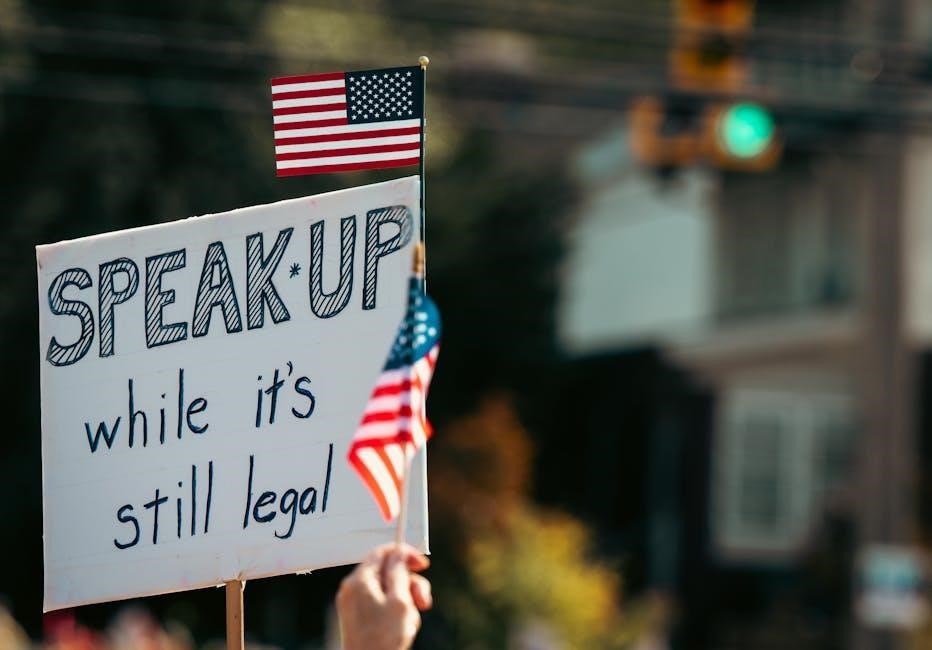
Content Overview: Historical Periods Covered
Voices of Freedom Volume 1 spans Reconstruction through the Cold War, encompassing the Gilded Age, Progressive Era, both World Wars, and post-war America.
It meticulously documents pivotal eras, offering primary source insights into societal shifts and political developments.

Reconstruction, 1865-1877
Voices of Freedom’s coverage of Reconstruction (1865-1877) delves into the complex aftermath of the Civil War, presenting firsthand accounts of freedom’s promise and its limitations.
This period, marked by attempts to rebuild the South and integrate formerly enslaved people into society, is illuminated through diverse primary sources.
Readers encounter the perspectives of African Americans navigating newfound liberties, alongside the resistance and discriminatory practices of white Southerners.
Documents reveal the political struggles surrounding Reconstruction policies, including debates over voting rights, land ownership, and federal intervention.
The collection showcases the voices of key figures – politicians, activists, and ordinary citizens – shaping this transformative era in American history, offering a nuanced understanding of its successes and failures.
These sources provide critical insight into the foundations of racial inequality that persisted long after Reconstruction’s end.
The Gilded Age, 1870-1890
Voices of Freedom’s exploration of the Gilded Age (1870-1890) unveils a period of rapid industrialization, economic growth, and stark social inequalities.
Primary sources reveal the experiences of workers facing harsh conditions, low wages, and the rise of powerful corporations.
The collection features voices from labor movements, including those advocating for workers’ rights, better pay, and safer workplaces.
Documents illuminate the perspectives of industrialists and entrepreneurs who amassed vast fortunes during this era, alongside critiques of their practices.
Readers encounter accounts of political corruption, the expansion of railroads, and the challenges faced by farmers and immigrants.
These sources offer a multifaceted understanding of the Gilded Age’s complexities, highlighting both its progress and its profound social costs.
Freedoms Boundaries, 1890-1900
Voices of Freedom’s coverage of 1890-1900, “Freedoms Boundaries,” examines the limitations of liberty during a period of significant social and political change.
Primary sources reveal the rise of Jim Crow laws in the South, systematically disenfranchising African Americans and enforcing segregation.
The collection includes accounts of resistance to racial discrimination, including early civil rights activism and legal challenges to segregation.
Documents illustrate the experiences of Native Americans facing forced assimilation policies and the loss of their lands and cultures.
Voices from the Populist movement express discontent with economic inequality and advocate for reforms to benefit farmers and workers.
These sources demonstrate how freedoms were unevenly distributed and contested, revealing the ongoing struggle for equality and justice.

Key Themes and Perspectives
Voices of Freedom emphasizes diverse perspectives, exploring themes of race, class, and gender through primary sources, revealing complex historical narratives.
The Progressive Era, 1900-1916
Voices of Freedom Volume 1 meticulously documents the Progressive Era (1900-1916), a period defined by widespread social activism and political reform across the United States.
This era witnessed fervent efforts to address problems caused by industrialization, urbanization, immigration, and political corruption, with reformers advocating for governmental regulation and social justice.
The collection features primary sources illustrating the diverse voices of the time – from muckraking journalists like Ida Tarbell exposing corporate wrongdoing, to suffragists demanding voting rights for women, and labor leaders fighting for improved working conditions.
Documents reveal debates surrounding issues like trust-busting, conservation, prohibition, and the role of government in regulating the economy, offering a nuanced understanding of this transformative period in American history.
Through these firsthand accounts, students can analyze the complexities of Progressive ideals and their lasting impact on American society, as presented within the Voices of Freedom compilation.
World War I and American Involvement, 1916-1920
Voices of Freedom Volume 1 provides critical primary source material concerning America’s entry into and experience during World War I (1916-1920), a period of immense national and global upheaval.
The collection showcases diverse perspectives on the war, from initial calls for neutrality to the eventual declaration of war against Germany, and the subsequent mobilization of American resources and manpower.

Documents reveal the intense debates surrounding American involvement, including anti-war protests, patriotic fervor, and the suppression of dissent through measures like the Espionage and Sedition Acts.
Students can analyze firsthand accounts from soldiers on the front lines, political leaders shaping war policy, and civilians grappling with the social and economic consequences of the conflict.
These sources illuminate the complexities of wartime America, as presented in Voices of Freedom, and its lasting impact on the nation’s role in global affairs.
The Roaring Twenties and Economic Shifts, 1920-1932
Voices of Freedom Volume 1 delves into the transformative era of the 1920s, a decade marked by unprecedented economic growth, social change, and cultural innovation, alongside underlying tensions.
The collection features primary sources illustrating the “roaring” aspects of the decade – jazz music, flappers, consumerism, and the rise of mass culture – alongside documents revealing anxieties about immigration and social morality.
Students can examine firsthand accounts of the economic boom, the stock market speculation, and the growing gap between the wealthy and the working class, setting the stage for the coming crisis.
Documents also explore the emergence of new forms of entertainment, the changing roles of women, and the cultural clashes between traditional and modern values, as presented in the text.
These sources provide a nuanced understanding of the complexities of the 1920s, as documented in Voices of Freedom, and its prelude to the Great Depression.

The Impact of Major Events
Voices of Freedom Volume 1 analyzes pivotal events—wars, economic shifts—through primary sources, revealing diverse perspectives and their lasting consequences on American society.
The New Deal Era, 1932-1940
Voices of Freedom Volume 1 meticulously examines the transformative New Deal era (1932-1940) through compelling primary source documents, offering students direct access to the period’s complexities.
These sources illuminate the responses to the Great Depression, showcasing President Franklin D. Roosevelt’s innovative programs and the societal debates they ignited;
The collection features firsthand accounts from those impacted by the New Deal—farmers, workers, and marginalized communities—revealing the human cost and benefits of these policies.
Students can analyze documents relating to the Civilian Conservation Corps (CCC), the Works Progress Administration (WPA), and the Social Security Act, understanding their intended impact and actual outcomes.
By engaging with these historical voices, readers gain a nuanced understanding of the New Deal’s legacy and its enduring influence on American governance and social welfare.
World War II and the Four Freedoms, 1941-1945
Voices of Freedom Volume 1 provides a powerful exploration of World War II (1941-1945) and President Franklin D. Roosevelt’s articulation of the “Four Freedoms”—freedom of speech, worship, from want, and from fear.
The collection features primary sources that reveal the complexities of American involvement in the war, including perspectives from soldiers, civilians, and political leaders.
Students can analyze documents related to the attack on Pearl Harbor, the mobilization of the American economy, and the experiences of those on the home front.
Crucially, the text examines the wartime challenges to civil liberties, such as the internment of Japanese Americans, prompting critical reflection on the balance between security and freedom.
Through these historical voices, readers gain a deeper understanding of the war’s impact on American society and the enduring significance of the Four Freedoms.
The Cold War Era, 1945-1953
Voices of Freedom Volume 1 delves into the nascent Cold War period (1945-1953), showcasing primary sources that illuminate the escalating tensions between the United States and the Soviet Union.
The collection presents diverse perspectives on the Truman Doctrine, the Marshall Plan, and the Korean War, revealing the ideological and geopolitical struggles of the era.
Students can analyze documents detailing the fear of communist infiltration within the US, exemplified by McCarthyism and the Red Scare, fostering critical examination of civil liberties.
The text explores the impact of Cold War anxieties on American culture, politics, and society, including the development of the nuclear arms race and its implications.
Through these historical voices, readers gain insight into the origins and early stages of the Cold War, and its lasting effects on global affairs.

Accessing Voices of Freedom Volume 1 PDF
Voices of Freedom Volume 1’s PDF is available through legitimate educational platforms, ensuring ethical access to this valuable historical resource for students.

Legality and Ethical Considerations of PDF Downloads
Downloading Voices of Freedom Volume 1 PDF from unauthorized sources raises significant legal and ethical concerns; copyright laws protect the intellectual property of authors and publishers.
Acquiring the text through illegal channels undermines the creators’ rights and the academic publishing ecosystem, potentially leading to legal repercussions for the downloader.
Ethically, supporting legitimate avenues for accessing educational materials ensures continued quality content creation and fair compensation for those involved in its production.
Prioritizing authorized platforms demonstrates respect for intellectual property rights and fosters a culture of academic integrity within educational communities.
Students and researchers should always verify the source’s legitimacy before downloading any PDF to avoid contributing to copyright infringement and maintain ethical standards.
Choosing legal options supports the authors and publishers, allowing them to continue providing valuable resources for historical study and academic pursuits.
Where to Find Legitimate PDF Resources
Locating a legitimate Voices of Freedom Volume 1 PDF requires utilizing authorized educational platforms and official publisher websites; W. W. Norton & Company is the primary source.
Many university libraries offer digital access to the textbook and accompanying document collections, including Voices of Freedom, through their online databases.
eTextbook providers, such as VitalSource or RedShelf, provide legally compliant digital versions for purchase or rental, ensuring secure access.
Checking with your course instructor or academic institution is crucial, as they may provide direct links to approved PDF resources.
Avoid unofficial websites offering free downloads, as these often violate copyright and may contain malware or compromised content.
Prioritizing these legitimate channels guarantees access to a verified, high-quality PDF version of Voices of Freedom for academic use.
Alternative Formats: eTextbooks and Online Access
Beyond the PDF format, Voices of Freedom Volume 1 is readily available as an eTextbook through various digital platforms, offering interactive learning experiences.
Providers like VitalSource and RedShelf present the text in a user-friendly digital format, often with features like highlighting, note-taking, and search capabilities.
These eTextbooks frequently offer rental options, providing a cost-effective alternative to purchasing a physical copy or a permanent digital license.
Online access through university library subscriptions grants students convenient, browser-based reading without requiring downloads or installations.
The EPUB format (urn:lcp:voicesoffreedomd0001unse:epub:b7e3219a-991a-430e-9e59-f0172ca271b0) is another digital option, compatible with many e-readers.
Exploring these alternatives ensures accessibility and caters to diverse learning preferences, enhancing engagement with the historical content.